
Hello, I’m Sid, a Senior Electrical Engineer and Solar Energy Consultant with more than 25 years of experience in electrical systems, renewable energy solutions, and solar power installations. One of the most important challenges in the solar industry is energy storage. Solar panels generate electricity during the day, but homes and businesses often need electricity during the evening and nighttime hours. This is where solar batteries become essential.
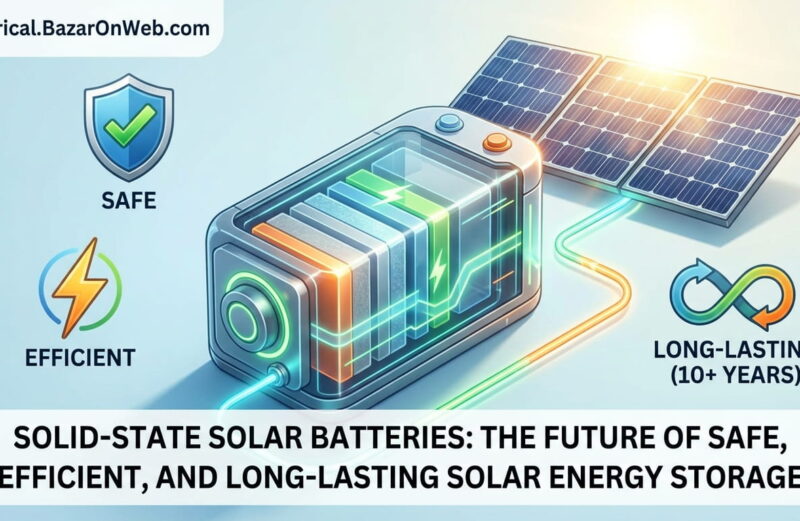
Traditional lithium-ion batteries have transformed the energy storage industry, but researchers and manufacturers are continuously seeking safer, more efficient, and longer-lasting alternatives. One of the most promising innovations in this field is the Solid-State Solar Battery. These advanced batteries replace the liquid electrolyte found in conventional batteries with a solid electrolyte, creating a safer and more energy-dense storage solution.
Solid-state batteries are expected to revolutionize renewable energy systems by offering improved safety, higher energy storage capacity, faster charging capabilities, and longer operational life. Many experts believe they will become the next generation of energy storage technology for residential, commercial, industrial, and utility-scale solar projects.
In this article, I will explain what solid-state solar batteries are, how they work, their advantages, challenges, and why they are considered a game-changing technology for the future of solar energy storage.
1. Understanding Solid-State Solar Batteries
A solid-state solar battery is an advanced energy storage device that uses a solid electrolyte instead of the liquid or gel electrolytes commonly found in lithium-ion batteries. The battery stores electricity generated by solar panels and releases it when power is required.
The primary components of a solid-state battery include the anode, cathode, and solid electrolyte. The solid electrolyte acts as the medium through which ions move during charging and discharging cycles. Since there is no liquid electrolyte, the risks associated with leakage, thermal runaway, and fire hazards are significantly reduced.
These batteries can be integrated into residential rooftop solar systems, commercial solar installations, electric vehicles, microgrids, and utility-scale renewable energy projects. Their ability to store large amounts of energy in a compact size makes them highly attractive for future energy applications.
Unlike traditional battery technologies, solid-state batteries can potentially achieve higher energy densities while maintaining better safety standards. This means users can store more electricity within the same physical space.
As solar energy adoption continues to grow worldwide, the demand for efficient and reliable storage systems is increasing rapidly. Solid-state batteries are emerging as a promising solution capable of meeting these future energy requirements.
2. How Solid-State Battery Technology Works
The operation of a solid-state battery is based on the movement of lithium ions between the anode and cathode through a solid electrolyte.
During charging, electricity generated by solar panels forces lithium ions to move from the cathode toward the anode. These ions are stored within the battery structure. When electricity is needed, the ions travel back to the cathode, generating an electrical current that powers connected loads.
The key innovation lies in the replacement of liquid electrolytes with solid materials such as ceramics, sulfides, phosphates, or polymer-based compounds. These materials allow ion transfer while providing enhanced structural stability.
Because the electrolyte is solid, there is a reduced risk of internal short circuits and battery degradation. The battery can also operate more efficiently under a wider range of temperatures.
Another important advantage is the possibility of using lithium metal anodes. Lithium metal can store significantly more energy than conventional graphite anodes used in lithium-ion batteries. This enables higher energy density and improved battery performance.
The technology is still evolving, but ongoing research and industrial investment are helping accelerate commercialization and improve manufacturing processes.
3. Higher Energy Density Compared to Conventional Batteries
One of the biggest benefits of solid-state batteries is their significantly higher energy density.
Energy density refers to the amount of energy a battery can store relative to its size and weight. A higher energy density means more stored electricity without increasing battery dimensions.
Traditional lithium-ion batteries have physical limitations because of their liquid electrolyte design. Solid-state batteries overcome many of these limitations by utilizing lithium metal anodes and compact solid electrolytes.
For solar energy users, this means more electricity can be stored in a smaller installation footprint. Homeowners with limited space can achieve greater backup power capacity without requiring large battery rooms or extensive infrastructure.
Commercial facilities can also benefit from reduced space requirements and improved energy management. Utility-scale projects may achieve greater storage capacity while optimizing land usage.
Higher energy density also improves transportation efficiency, installation flexibility, and overall system performance.
As solar adoption increases globally, maximizing storage capacity within limited space will become increasingly important, making solid-state technology an attractive long-term solution.
4. Enhanced Safety Features
Safety is one of the strongest selling points of solid-state battery technology.
Conventional lithium-ion batteries contain flammable liquid electrolytes. Under certain conditions such as overheating, physical damage, or manufacturing defects, these batteries can experience thermal runaway, leading to fires or explosions.
Solid-state batteries eliminate much of this risk because their electrolytes are non-flammable solids. The absence of combustible liquids greatly enhances operational safety.
This makes them particularly valuable for residential solar systems where batteries are often installed inside homes, garages, or utility rooms.
Commercial and industrial facilities can also benefit from reduced fire protection requirements and improved workplace safety. Insurance risks may potentially decrease as safer storage technologies become widely adopted.
The solid structure further improves mechanical stability and resistance to punctures or physical damage.
For critical infrastructure applications such as hospitals, data centers, telecommunications networks, and emergency backup systems, enhanced safety provides significant operational advantages.
As governments and industries prioritize safer renewable energy technologies, solid-state batteries are expected to become an increasingly attractive choice.
5. Longer Lifespan and Durability
Battery lifespan is a critical factor in determining the overall value of a solar energy storage system.
Solid-state batteries are designed to withstand a greater number of charge and discharge cycles compared to many traditional battery technologies. The solid electrolyte experiences less degradation over time, resulting in improved durability.
In solar applications, batteries typically cycle daily as they store daytime energy and discharge it during the evening. Over several years, this repeated cycling can significantly impact battery performance.
Because solid-state batteries experience less wear and chemical degradation, they maintain their storage capacity for a longer period.
A longer operational lifespan translates into lower replacement costs and reduced maintenance requirements. Homeowners and businesses can benefit from improved return on investment over the life of their solar energy systems.
Extended durability also reduces environmental waste by decreasing the frequency of battery disposal and replacement.
As battery technology advances, future solid-state systems are expected to offer even greater longevity, further enhancing their economic and environmental benefits.
6. Faster Charging Capabilities
Another major advantage of solid-state batteries is their potential for faster charging.
The advanced electrolyte materials used in these batteries can facilitate rapid ion movement, allowing energy to be stored more efficiently.
For solar applications, faster charging means batteries can absorb more energy during peak sunlight hours. This is particularly valuable in regions where weather conditions are unpredictable or daylight hours are limited.
Rapid charging also improves system responsiveness during fluctuating energy production periods. Solar systems can capture and store available energy more effectively.
Commercial facilities operating under time-sensitive energy management strategies can benefit from improved charging performance and greater operational flexibility.
As solar generation continues to increase worldwide, the ability to store energy quickly and efficiently will become increasingly important.
Manufacturers are investing heavily in research to optimize charging speeds while maintaining battery safety and lifespan, making this one of the most exciting aspects of solid-state battery development.
7. Improved Performance in Extreme Temperatures
Environmental conditions can significantly impact battery performance.
Traditional lithium-ion batteries often experience reduced efficiency, capacity loss, or accelerated degradation when exposed to extreme heat or cold.
Solid-state batteries are generally more resilient under varying temperature conditions. Their solid electrolytes provide greater thermal stability and improved operational reliability.
This makes them particularly suitable for solar installations in challenging climates such as deserts, mountainous regions, and areas experiencing harsh seasonal weather variations.
In hot environments, solid-state batteries can maintain safer operation with reduced overheating risks. In cold climates, they may deliver more consistent performance than conventional battery technologies.
For utility-scale renewable energy projects located in remote regions, temperature resilience contributes to improved system reliability and reduced maintenance requirements.
As climate conditions become increasingly unpredictable, robust energy storage technologies capable of operating efficiently in diverse environments will be highly valuable.
8. Environmental Benefits of Solid-State Batteries
Sustainability is a major driving force behind renewable energy adoption.
Solid-state batteries can contribute to environmental protection in several ways. Their longer lifespan reduces battery waste and decreases the frequency of manufacturing replacements.
Improved energy efficiency means less energy is lost during charging and discharging cycles. This enhances overall renewable energy utilization and reduces dependence on fossil fuel-based backup systems.
The elimination of flammable liquid electrolytes may also reduce environmental risks associated with leaks and chemical contamination.
Researchers are exploring environmentally friendly materials and manufacturing techniques to further improve the sustainability profile of solid-state batteries.
By enabling more efficient solar energy storage, these batteries support the transition toward cleaner electricity generation and lower greenhouse gas emissions.
As nations pursue ambitious carbon reduction targets, advanced storage technologies such as solid-state batteries will play a crucial role in building sustainable energy infrastructures.
9. Applications in Residential and Commercial Solar Systems
Solid-state batteries have the potential to transform various sectors of the solar industry.
For homeowners, they can provide reliable backup power, increased energy independence, and improved utilization of rooftop solar systems.
Commercial buildings can use solid-state storage to reduce electricity costs, manage peak demand charges, and enhance energy resilience.
Industrial facilities can benefit from improved power quality, backup capabilities, and renewable energy integration.
Microgrids and remote communities can utilize solid-state batteries to stabilize energy supply and reduce dependence on diesel generators.
Utility companies can deploy large-scale battery storage systems to balance renewable energy production and maintain grid stability.
As manufacturing scales up and costs decrease, solid-state batteries are expected to become increasingly accessible across all segments of the solar energy market.
10. Challenges and Future Outlook
Despite their tremendous potential, solid-state batteries still face several challenges.
Manufacturing complexity remains one of the biggest obstacles. Producing high-quality solid electrolytes at scale requires advanced materials and precision engineering.
Current production costs are higher than conventional lithium-ion batteries, limiting widespread adoption. However, costs are expected to decline as research advances and manufacturing volumes increase.
Scientists are also working to improve electrolyte conductivity, interface stability, and large-scale production efficiency.
Major technology companies, automotive manufacturers, and energy storage developers are investing billions of dollars in solid-state battery research.
Industry analysts predict that commercial adoption will accelerate over the next decade as technological barriers are overcome.
The future outlook is extremely promising. Solid-state batteries have the potential to redefine energy storage by providing safer, more efficient, and longer-lasting solutions for solar power systems worldwide.
Conclusion
Solid-state solar batteries represent one of the most exciting advancements in renewable energy storage technology. By replacing traditional liquid electrolytes with solid materials, these batteries offer significant improvements in safety, energy density, charging speed, lifespan, and environmental sustainability.
As someone who has worked in electrical engineering and solar energy for over 25 years, I believe solid-state batteries will play a major role in the next generation of solar power systems. While challenges related to cost and manufacturing remain, ongoing research and investment are rapidly bringing this technology closer to mainstream adoption.
For homeowners, businesses, industries, and utility providers seeking reliable and future-ready energy storage solutions, solid-state batteries represent a transformative innovation that could significantly enhance the efficiency and effectiveness of solar energy systems in the years ahead.