
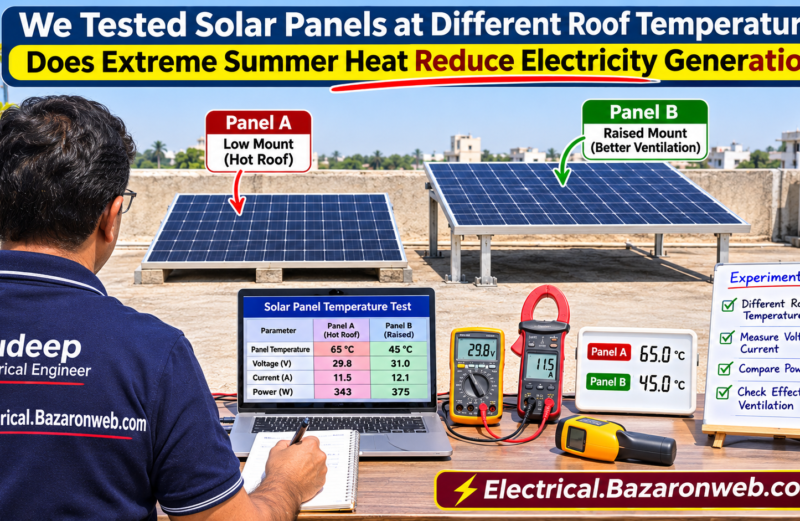
Understanding the Impact of Roof Temperature on Solar Panel Performance During summer, solar panels receive plenty of sunlight. Many homeowners believe that stronger sunlight and higher outdoor temperatures automatically mean greater electricity generation. However, there is an important technical factor that is often overlooked: solar panel temperature. Solar panels generate electricity using sunlight, not heat. […]
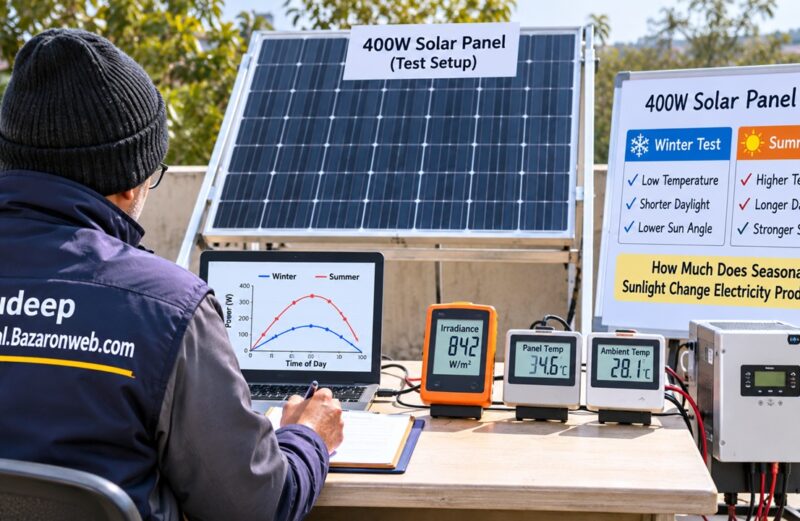
We Tested a 400W Solar Panel in Winter vs Summer: How Much Does Seasonal Sunlight Change Electricity Production?
Solar panels are often advertised with a fixed power rating, such as 400 watts, 450 watts, or 550 watts. However, anyone who has worked with solar installations knows that a panel does not produce the same amount of electricity throughout the year. Seasonal changes in sunlight, temperature, daylight duration, cloud cover, and the angle of […]
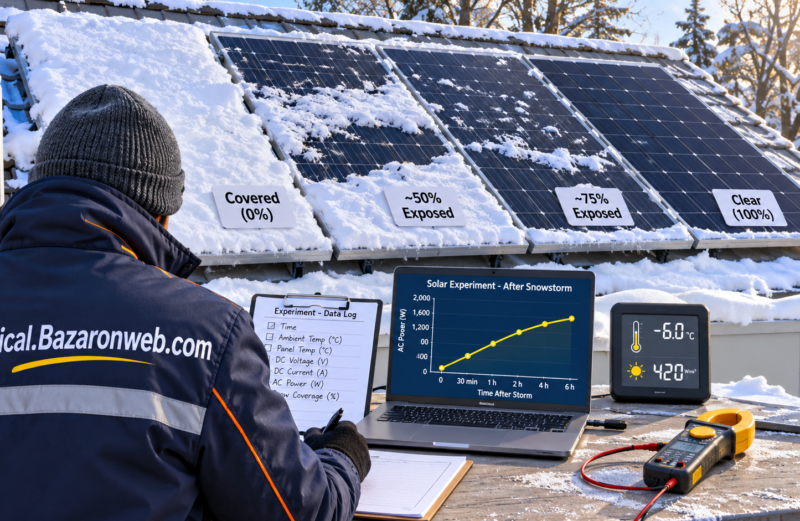
We Tested Solar Panels After a Snowstorm: How Quickly Do They Start Producing Electricity Again?
An Electrical Engineering Experiment by Sudeep | Electrical.Bazaronweb.com Introduction One question I frequently hear from homeowners considering solar power in colder regions is whether solar panels continue producing electricity after a heavy snowfall. More importantly, how long does it take for them to start generating power again once a snowstorm has passed? This is a […]
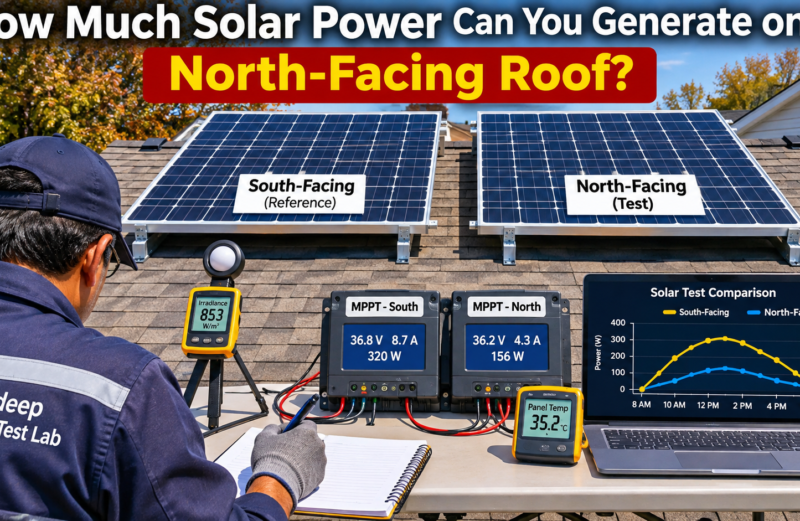
How Much Solar Power Can You Generate on a North-Facing Roof? Real-World Tests for USA and Canadian Homes
One of the first things I check before recommending a residential solar installation is the direction of the roof. Roof orientation has a direct influence on solar electricity generation, particularly in countries located in the Northern Hemisphere, such as the United States and Canada. In these countries, south-facing solar panels generally receive more direct sunlight […]
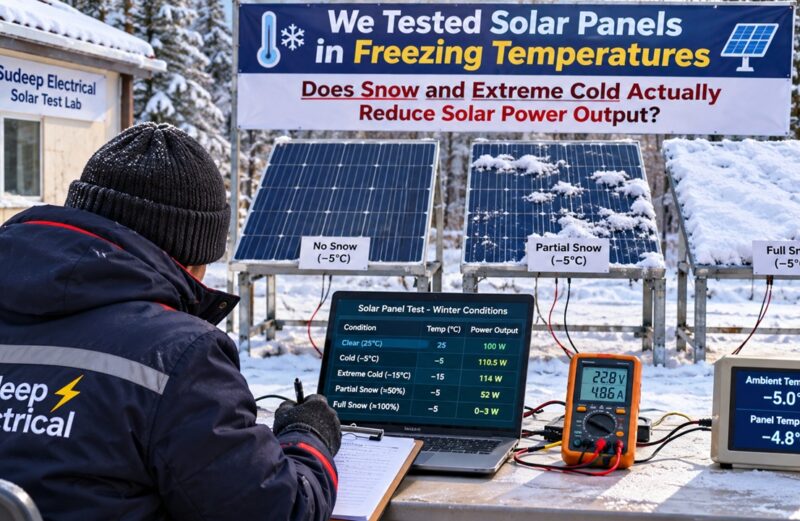
We Tested Solar Panels in Freezing Temperatures: Does Snow and Extreme Cold Actually Reduce Solar Power Output?
Most people associate solar power generation with hot summer days, bright sunshine and clear skies. When winter arrives, temperatures fall, daylight hours become shorter and snow begins covering rooftops. Naturally, homeowners start wondering whether their solar panels can continue producing electricity efficiently in freezing weather. During my 25 years of experience in electrical engineering, solar […]

We Tested 15-Amp vs 20-Amp Circuits: Which Household Appliances Can Each Safely Handle?
Have you ever switched on a microwave while running a toaster, only to find that the circuit breaker suddenly trips? Or perhaps you have wondered why some kitchen outlets are rated for 20 amps while ordinary bedroom outlets are commonly rated for 15 amps. The answer lies in understanding electrical circuit capacity. In North American […]

Why Do Breakers Trip When You Run Multiple Appliances? Real Home Load Tests Explained for North American Homes
Why does your circuit breaker trip when you run multiple appliances? A microwave, toaster, and coffee maker can quickly overload a shared circuit. Learn how voltage, current, appliance ratings, and breaker capacity interact, why portable heaters create problems, and when repeated trips indicate a dangerous electrical fault requiring professional attention.
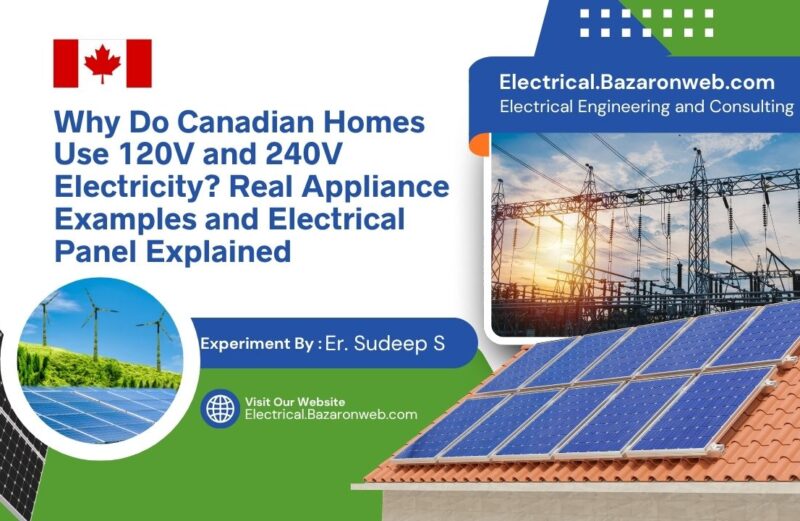
Why Do Canadian Homes Use 120V and 240V Electricity? Real Appliance Examples and Electrical Panel Explained
Canadian homes use both 120-volt and 240-volt electricity to power everyday appliances, kitchen equipment, clothes dryers, water heaters, and heating systems. For people familiar with electrical systems in India or Europe, this arrangement can seem unusual. Why does a television typically use 120V while an electric clothes dryer requires 240V? How can both voltages come […]

How Much Does It Cost to Charge an Electric Car at Home in the USA and Canada? Electricity Rates, Charging Time and Cost Calculator
How much does it really cost to charge an electric car at home? The answer depends on your electricity rate, battery size, driving distance, and charging efficiency. From a standard household outlet to a Level 2 charger, understanding energy consumption can help you estimate costs, reduce expenses, and charge smarter.

How to Size a Transformer for a 500 kW Commercial Load: kVA, Diversity Factor and Safety Margin Explained
Sizing a transformer for a 500 kW commercial building is not simply a matter of choosing a 500 kVA unit. Power factor, maximum demand, diversity, motor starting, harmonics, future expansion, and safety margins all affect the final selection. Let’s calculate the requirement step by step using practical commercial electrical examples.