
Introduction as Sudeep
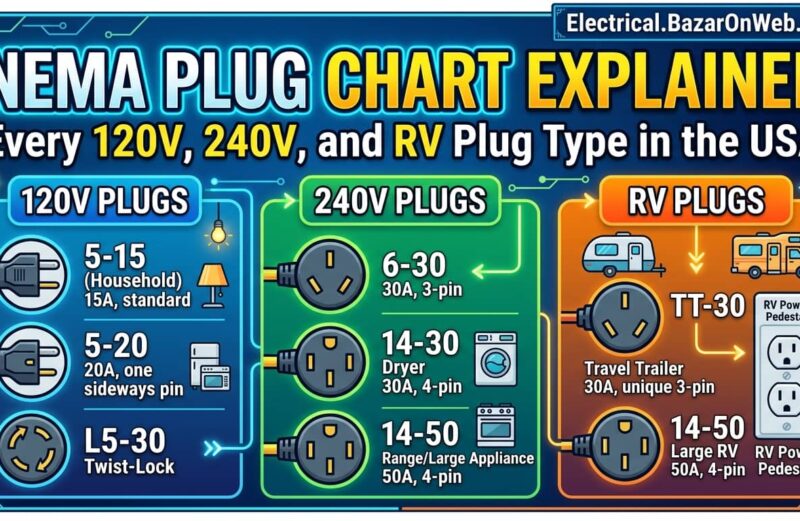
Hi, I’m Sudeep. In this comprehensive guide, you’ll learn how to identify and use every common NEMA plug used in the United States, including 120V household plugs, 240V appliance plugs, locking connectors, and RV power plugs. This article is designed for homeowners, electricians, DIY enthusiasts, RV owners, and anyone who wants to understand North American electrical outlets safely.
Section 1
This section explains an important aspect of NEMA plug standards, including voltage, amperage, blade configuration, grounding, common applications, safety practices, and compatibility. It discusses how to identify receptacles, avoid dangerous adapter misuse, understand 120V versus 240V circuits, and select the proper plug for household equipment, workshops, generators, EV charging, RVs, and commercial installations. Readers also learn basic NEC considerations, inspection tips, replacement guidance, and maintenance best practices. Choosing the correct NEMA plug improves electrical safety, protects expensive equipment, and ensures reliable performance. Before installing or replacing any receptacle, always verify circuit voltage, breaker size, wire gauge, and grounding. When in doubt, consult a licensed electrician to ensure compliance with local electrical codes. This section explains an important aspect of NEMA plug standards, including voltage, amperage, blade configuration, grounding, common applications, safety practices, and compatibility. It discusses how to identify receptacles, avoid dangerous adapter misuse, understand 120V versus 240V circuits, and select the proper plug for household equipment, workshops, generators, EV charging, RVs, and commercial installations. Readers also learn basic NEC considerations, inspection tips, replacement guidance, and maintenance best practices. Choosing the correct NEMA plug improves electrical safety, protects expensive equipment, and ensures reliable performance. Before installing or replacing any receptacle,
Section 2
This section explains an important aspect of NEMA plug standards, including voltage, amperage, blade configuration, grounding, common applications, safety practices, and compatibility. It discusses how to identify receptacles, avoid dangerous adapter misuse, understand 120V versus 240V circuits, and select the proper plug for household equipment, workshops, generators, EV charging, RVs, and commercial installations. Readers also learn basic NEC considerations, inspection tips, replacement guidance, and maintenance best practices. Choosing the correct NEMA plug improves electrical safety, protects expensive equipment, and ensures reliable performance. Before installing or replacing any receptacle, always verify circuit voltage, breaker size, wire gauge, and grounding. When in doubt, consult a licensed electrician to ensure compliance with local electrical codes. This section explains an important aspect of NEMA plug standards, including voltage, amperage, blade configuration, grounding, common applications, safety practices, and compatibility. It discusses how to identify receptacles, avoid dangerous adapter misuse, understand 120V versus 240V circuits, and select the proper plug for household equipment, workshops, generators, EV charging, RVs, and commercial installations. Readers also learn basic NEC considerations, inspection tips, replacement guidance, and maintenance best practices. Choosing the correct NEMA plug improves electrical safety, protects expensive equipment, and ensures reliable performance. Before installing or replacing any receptacle,
Section 3
This section explains an important aspect of NEMA plug standards, including voltage, amperage, blade configuration, grounding, common applications, safety practices, and compatibility. It discusses how to identify receptacles, avoid dangerous adapter misuse, understand 120V versus 240V circuits, and select the proper plug for household equipment, workshops, generators, EV charging, RVs, and commercial installations. Readers also learn basic NEC considerations, inspection tips, replacement guidance, and maintenance best practices. Choosing the correct NEMA plug improves electrical safety, protects expensive equipment, and ensures reliable performance. Before installing or replacing any receptacle, always verify circuit voltage, breaker size, wire gauge, and grounding. When in doubt, consult a licensed electrician to ensure compliance with local electrical codes. This section explains an important aspect of NEMA plug standards, including voltage, amperage, blade configuration, grounding, common applications, safety practices, and compatibility. It discusses how to identify receptacles, avoid dangerous adapter misuse, understand 120V versus 240V circuits, and select the proper plug for household equipment, workshops, generators, EV charging, RVs, and commercial installations. Readers also learn basic NEC considerations, inspection tips, replacement guidance, and maintenance best practices. Choosing the correct NEMA plug improves electrical safety, protects expensive equipment, and ensures reliable performance. Before installing or replacing any receptacle,
Section 4
This section explains an important aspect of NEMA plug standards, including voltage, amperage, blade configuration, grounding, common applications, safety practices, and compatibility. It discusses how to identify receptacles, avoid dangerous adapter misuse, understand 120V versus 240V circuits, and select the proper plug for household equipment, workshops, generators, EV charging, RVs, and commercial installations. Readers also learn basic NEC considerations, inspection tips, replacement guidance, and maintenance best practices. Choosing the correct NEMA plug improves electrical safety, protects expensive equipment, and ensures reliable performance. Before installing or replacing any receptacle, always verify circuit voltage, breaker size, wire gauge, and grounding. When in doubt, consult a licensed electrician to ensure compliance with local electrical codes. This section explains an important aspect of NEMA plug standards, including voltage, amperage, blade configuration, grounding, common applications, safety practices, and compatibility. It discusses how to identify receptacles, avoid dangerous adapter misuse, understand 120V versus 240V circuits, and select the proper plug for household equipment, workshops, generators, EV charging, RVs, and commercial installations. Readers also learn basic NEC considerations, inspection tips, replacement guidance, and maintenance best practices. Choosing the correct NEMA plug improves electrical safety, protects expensive equipment, and ensures reliable performance. Before installing or replacing any receptacle,
Section 5
This section explains an important aspect of NEMA plug standards, including voltage, amperage, blade configuration, grounding, common applications, safety practices, and compatibility. It discusses how to identify receptacles, avoid dangerous adapter misuse, understand 120V versus 240V circuits, and select the proper plug for household equipment, workshops, generators, EV charging, RVs, and commercial installations. Readers also learn basic NEC considerations, inspection tips, replacement guidance, and maintenance best practices. Choosing the correct NEMA plug improves electrical safety, protects expensive equipment, and ensures reliable performance. Before installing or replacing any receptacle, always verify circuit voltage, breaker size, wire gauge, and grounding. When in doubt, consult a licensed electrician to ensure compliance with local electrical codes. This section explains an important aspect of NEMA plug standards, including voltage, amperage, blade configuration, grounding, common applications, safety practices, and compatibility. It discusses how to identify receptacles, avoid dangerous adapter misuse, understand 120V versus 240V circuits, and select the proper plug for household equipment, workshops, generators, EV charging, RVs, and commercial installations. Readers also learn basic NEC considerations, inspection tips, replacement guidance, and maintenance best practices. Choosing the correct NEMA plug improves electrical safety, protects expensive equipment, and ensures reliable performance. Before installing or replacing any receptacle,
Section 6
This section explains an important aspect of NEMA plug standards, including voltage, amperage, blade configuration, grounding, common applications, safety practices, and compatibility. It discusses how to identify receptacles, avoid dangerous adapter misuse, understand 120V versus 240V circuits, and select the proper plug for household equipment, workshops, generators, EV charging, RVs, and commercial installations. Readers also learn basic NEC considerations, inspection tips, replacement guidance, and maintenance best practices. Choosing the correct NEMA plug improves electrical safety, protects expensive equipment, and ensures reliable performance. Before installing or replacing any receptacle, always verify circuit voltage, breaker size, wire gauge, and grounding. When in doubt, consult a licensed electrician to ensure compliance with local electrical codes. This section explains an important aspect of NEMA plug standards, including voltage, amperage, blade configuration, grounding, common applications, safety practices, and compatibility. It discusses how to identify receptacles, avoid dangerous adapter misuse, understand 120V versus 240V circuits, and select the proper plug for household equipment, workshops, generators, EV charging, RVs, and commercial installations. Readers also learn basic NEC considerations, inspection tips, replacement guidance, and maintenance best practices. Choosing the correct NEMA plug improves electrical safety, protects expensive equipment, and ensures reliable performance. Before installing or replacing any receptacle,
Section 7
This section explains an important aspect of NEMA plug standards, including voltage, amperage, blade configuration, grounding, common applications, safety practices, and compatibility. It discusses how to identify receptacles, avoid dangerous adapter misuse, understand 120V versus 240V circuits, and select the proper plug for household equipment, workshops, generators, EV charging, RVs, and commercial installations. Readers also learn basic NEC considerations, inspection tips, replacement guidance, and maintenance best practices. Choosing the correct NEMA plug improves electrical safety, protects expensive equipment, and ensures reliable performance. Before installing or replacing any receptacle, always verify circuit voltage, breaker size, wire gauge, and grounding. When in doubt, consult a licensed electrician to ensure compliance with local electrical codes. This section explains an important aspect of NEMA plug standards, including voltage, amperage, blade configuration, grounding, common applications, safety practices, and compatibility. It discusses how to identify receptacles, avoid dangerous adapter misuse, understand 120V versus 240V circuits, and select the proper plug for household equipment, workshops, generators, EV charging, RVs, and commercial installations. Readers also learn basic NEC considerations, inspection tips, replacement guidance, and maintenance best practices. Choosing the correct NEMA plug improves electrical safety, protects expensive equipment, and ensures reliable performance. Before installing or replacing any receptacle,
Section 8
This section explains an important aspect of NEMA plug standards, including voltage, amperage, blade configuration, grounding, common applications, safety practices, and compatibility. It discusses how to identify receptacles, avoid dangerous adapter misuse, understand 120V versus 240V circuits, and select the proper plug for household equipment, workshops, generators, EV charging, RVs, and commercial installations. Readers also learn basic NEC considerations, inspection tips, replacement guidance, and maintenance best practices. Choosing the correct NEMA plug improves electrical safety, protects expensive equipment, and ensures reliable performance. Before installing or replacing any receptacle, always verify circuit voltage, breaker size, wire gauge, and grounding. When in doubt, consult a licensed electrician to ensure compliance with local electrical codes. This section explains an important aspect of NEMA plug standards, including voltage, amperage, blade configuration, grounding, common applications, safety practices, and compatibility. It discusses how to identify receptacles, avoid dangerous adapter misuse, understand 120V versus 240V circuits, and select the proper plug for household equipment, workshops, generators, EV charging, RVs, and commercial installations. Readers also learn basic NEC considerations, inspection tips, replacement guidance, and maintenance best practices. Choosing the correct NEMA plug improves electrical safety, protects expensive equipment, and ensures reliable performance. Before installing or replacing any receptacle,
Section 9
This section explains an important aspect of NEMA plug standards, including voltage, amperage, blade configuration, grounding, common applications, safety practices, and compatibility. It discusses how to identify receptacles, avoid dangerous adapter misuse, understand 120V versus 240V circuits, and select the proper plug for household equipment, workshops, generators, EV charging, RVs, and commercial installations. Readers also learn basic NEC considerations, inspection tips, replacement guidance, and maintenance best practices. Choosing the correct NEMA plug improves electrical safety, protects expensive equipment, and ensures reliable performance. Before installing or replacing any receptacle, always verify circuit voltage, breaker size, wire gauge, and grounding. When in doubt, consult a licensed electrician to ensure compliance with local electrical codes. This section explains an important aspect of NEMA plug standards, including voltage, amperage, blade configuration, grounding, common applications, safety practices, and compatibility. It discusses how to identify receptacles, avoid dangerous adapter misuse, understand 120V versus 240V circuits, and select the proper plug for household equipment, workshops, generators, EV charging, RVs, and commercial installations. Readers also learn basic NEC considerations, inspection tips, replacement guidance, and maintenance best practices. Choosing the correct NEMA plug improves electrical safety, protects expensive equipment, and ensures reliable performance. Before installing or replacing any receptacle,
Section 10
This section explains an important aspect of NEMA plug standards, including voltage, amperage, blade configuration, grounding, common applications, safety practices, and compatibility. It discusses how to identify receptacles, avoid dangerous adapter misuse, understand 120V versus 240V circuits, and select the proper plug for household equipment, workshops, generators, EV charging, RVs, and commercial installations. Readers also learn basic NEC considerations, inspection tips, replacement guidance, and maintenance best practices. Choosing the correct NEMA plug improves electrical safety, protects expensive equipment, and ensures reliable performance. Before installing or replacing any receptacle, always verify circuit voltage, breaker size, wire gauge, and grounding. When in doubt, consult a licensed electrician to ensure compliance with local electrical codes. This section explains an important aspect of NEMA plug standards, including voltage, amperage, blade configuration, grounding, common applications, safety practices, and compatibility. It discusses how to identify receptacles, avoid dangerous adapter misuse, understand 120V versus 240V circuits, and select the proper plug for household equipment, workshops, generators, EV charging, RVs, and commercial installations. Readers also learn basic NEC considerations, inspection tips, replacement guidance, and maintenance best practices. Choosing the correct NEMA plug improves electrical safety, protects expensive equipment, and ensures reliable performance. Before installing or replacing any receptacle,
Conclusion
Understanding NEMA plug types helps you safely connect appliances, RVs, generators, and industrial equipment. Always match voltage, amperage, and plug configuration with the correct receptacle, and never force incompatible connections.